
Background
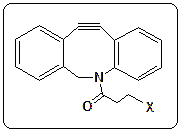
DBCO (dibenzocyclooctyne) labeling allows for a highly-specific, non-toxic copper-free method to covalently link biomolecules to azide-tagged targets. A bioorthogonal reaction, it does not interfere with natural biological processes in the cell. Common applications of DBCO labeling include antibody-drug conjugates (ADCs) for attaching payloads or fluorophores to antibodies, metabolic labeling for imaging, and affinity purification through DBCO-functionalized beads. Common reagents include amine-reactive DBCO, biotin-DBCO, and fluorophore-DBCO. DBCO polymer conjugation also allows for the linkage of functional polymers (PEG, dextran, chitosan) with azide-terminated biomolecules, nanoparticles, and surfaces.
Research
“Label-capture-release” for isolating viable circulating tumor cells for drug testing
Chitosan has recently featured in several research publications, including Lao et al., 2025. In this study, researchers used DBCO-functionalized chitosan as a bioorthogonal capture surface for isolating circulating tumor cells (CTCs). They first labeled azide groups with an azido sugar precursor, which, after contact with the DBCO-coated chitosan surface, rapidly formed covalent bonds through copper-free strain-promoted azide-alkyne cycloaddition (SPAAC). This selective click reaction enables efficient capture of viable CTCs while minimizing nonspecific binding of normal blood cells. This method has shown promise across 10 different forms of cancer.
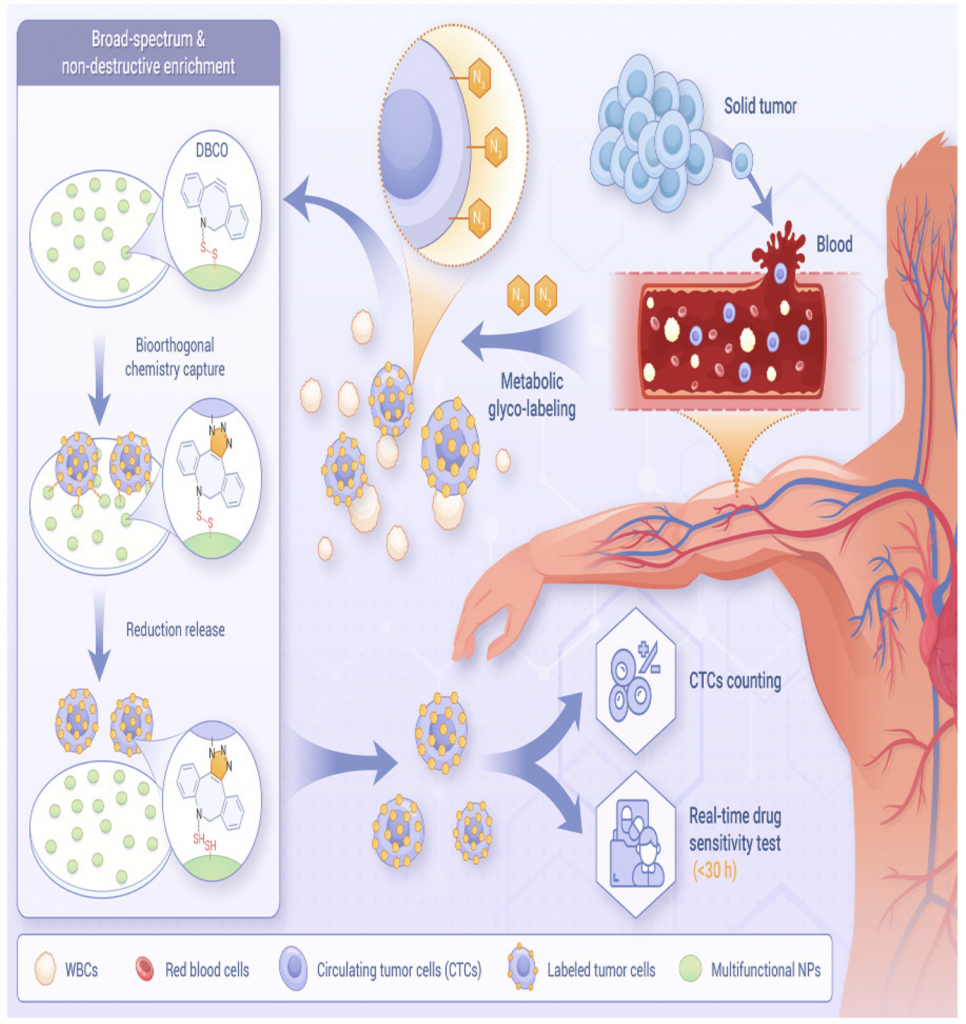
Fig. 1. Graphical abstract adapted from Lao et al., 2025.
Chitosan engineered for enhanced Mesenchymal Stem Cells Delivery
Zhao et al., 2026 used DBCO-functionalized chitosan to covalently anchor mesenchymal stem cells (MSCs) onto a chitosan scaffold. The stable cell–scaffold linkage enhances secretion of neurotrophic factors, modulates the local immune environment, and promotes angiogenesis and nerve regeneration. In animal models of sciatic nerve injury, this bioorthogonal strategy significantly improved functional nerve repair compared with conventional MSC delivery. The clinical goal of this technology is to improve the effectiveness of stem cell therapy for repairing damaged peripheral nerves.
Conclusion
DBCO provides a wide range of ways to conjugate biomolecules for targeted fluorescence, delivery, and bioorthogonal applications. Learn more about CBP’s click chemistry reagents.
References:
Lao, Z., Ren, X., Zhuang, D., Xie, L., Zhang, Y., Li, W., … & Wang, H. (2025). A phenotype-independent “label-capture-release” process for isolating viable circulating tumor cells in real-time drug susceptibility testing. The Innovation, 6(5).
Zhao, X., Jiang, X., Liang, B., Deng, H., Ma, Y., Liu, X., … & Yang, Y. (2026). A Bio‐Orthogonal Engineered Chitosan Platform for Enhanced Mesenchymal Stem Cells Delivery and Function in Peripheral Nerve Repair. Advanced Materials, e23237.
See CBP’s list of DBCO reagents:
| Cat# | Name | Size | Price | Stock status | Buy |
|---|---|---|---|---|---|
| DB-5001 | Dextran, DBCO Labeled, MW 70 kDa | $364.00 | In stock | Add to cart This product has multiple variants. The options may be chosen on the product page $364.00 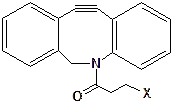 | |
| DB-0112 | DBCO-Thiol | $284.00 | In stock | Add to cart This product has multiple variants. The options may be chosen on the product page $284.00 | |
| DB-0110 | DBCO-x-COOH | $284.00 | In stock | Add to cart This product has multiple variants. The options may be chosen on the product page $284.00  | |
| DB-0111 | DBCO-x-NHS | $284.00 | In stock | Add to cart This product has multiple variants. The options may be chosen on the product page $284.00 | |
| DB-0100 | Chitosan, DBCO Labeled | $364.00 | In stock | Add to cart This product has multiple variants. The options may be chosen on the product page $364.00 | |
| DB-0025 | DBCO-benzaldehyde | $284.00 | In stock | Add to cart This product has multiple variants. The options may be chosen on the product page $284.00 | |
| DB-0001-1-1 | DBCO-SMCC | $284.00 | In stock | Add to cart This product has multiple variants. The options may be chosen on the product page $284.00 | |
| DB-0024 | DBCO-SPDP | $284.00 | In stock | Add to cart This product has multiple variants. The options may be chosen on the product page $284.00 | |
| DB-0023 | DMG DBCO Conjugate | $284.00 | In stock | Add to cart This product has multiple variants. The options may be chosen on the product page $284.00  | |
| DB-0022 | DMPE DBCO Conjugate | $284.00 | In stock | Add to cart This product has multiple variants. The options may be chosen on the product page $284.00 | |
| DB-0021 | DBCO Alexa Fluor 488 | $284.00 | In stock | Add to cart This product has multiple variants. The options may be chosen on the product page $284.00 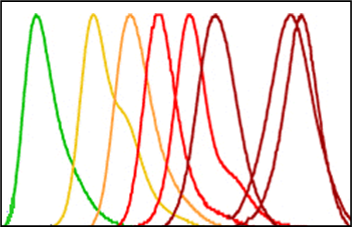 | |
| DB-0020 | DBCO Alexa Fluor 647 | $284.00 | In stock | Add to cart This product has multiple variants. The options may be chosen on the product page $284.00 | |
| DB-0019 | DBCO Alexa Fluor 680 | $284.00 | In stock | Add to cart This product has multiple variants. The options may be chosen on the product page $284.00 | |
| DB-0018 | DBCO Cy5.5 | $284.00 | In stock | Add to cart This product has multiple variants. The options may be chosen on the product page $284.00 | |
| DB-0017 | DBCO Cy5 | $284.00 | In stock | Add to cart This product has multiple variants. The options may be chosen on the product page $284.00 | |
| DB-0016 | DBCO Cy3 | $284.00 | In stock | Add to cart This product has multiple variants. The options may be chosen on the product page $284.00 | |
| DB-0015 | DBCO Rhodamine | $284.00 | In stock | Add to cart This product has multiple variants. The options may be chosen on the product page $284.00 | |
| DB-0014 | DBCO FITC | $284.00 | In stock | Add to cart This product has multiple variants. The options may be chosen on the product page $284.00 | |
| DB-0013 | DBCO Biotin | $284.00 | In stock | Add to cart This product has multiple variants. The options may be chosen on the product page $284.00 | |
| DB-0011 | DBCO Carbonyl Hydrazide | $284.00 | In stock | Add to cart This product has multiple variants. The options may be chosen on the product page $284.00 | |
| DB-0012 | DBCO DSPE | $284.00 | In stock | Add to cart This product has multiple variants. The options may be chosen on the product page $284.00 | |
| DB-0010 | DBCO-COOH | $284.00 | In stock | Add to cart This product has multiple variants. The options may be chosen on the product page $284.00 | |
| DB-0101 | DBCO-x-amine | $284.00 | In stock | Add to cart This product has multiple variants. The options may be chosen on the product page $284.00 | |
| DB-0001-2 | DBCO-TFP | Price range: $115.00 through $985.00 | In stock | Add to cart This product has multiple variants. The options may be chosen on the product page $115.00 $115.00 $115.00 $285.00 $285.00 $285.00 $985.00 $985.00 $985.00 | |
| DB-0001-1 | DBCO-Maleimide | $284.00 | In stock | Add to cart This product has multiple variants. The options may be chosen on the product page $284.00 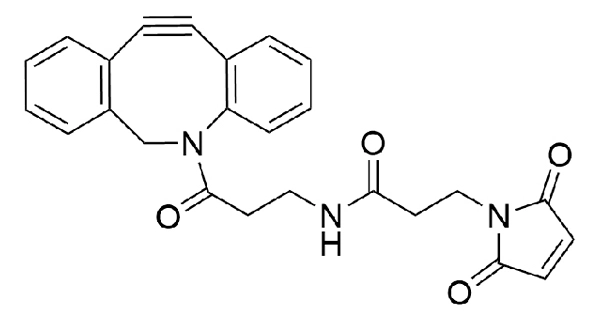 | |
| DB-0001 | DBCO-NHS | Price range: $115.00 through $985.00 | In stock | Add to cart This product has multiple variants. The options may be chosen on the product page $115.00 $115.00 $115.00 $115.00 $285.00 $285.00 $285.00 $285.00 $985.00 $985.00 $985.00 $985.00 | |
| DB-0002 | DBCO-x-Maleimide | $125.00 | In stock | Add to cart This product has multiple variants. The options may be chosen on the product page $125.00  | |
| DB-0004 | DBCO-x-Thiol | $125.00 | In stock | Add to cart This product has multiple variants. The options may be chosen on the product page $125.00 |
Blog
This section provides an overview of the blog, showcasing a variety of articles, insights, and resources to inform and inspire readers.
-

Norbornene Click Chemistry
Norbornene (NBE) click reagents are designed for copper-free bioorthogonal conjugation with tetrazines through the inverse…
-
FITC (fluorescein isothiocyanate)
Background: Fluorescein belongs to a class of fluorescent chemical compounds known as small-molecule fluorophores. A…
-
Carbonylacrylic Reagents
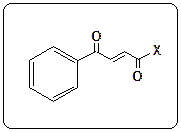
Background: Carbonylacrylic (CBA) is a class of highly reactive reagents that undergo the Michael addition,…